

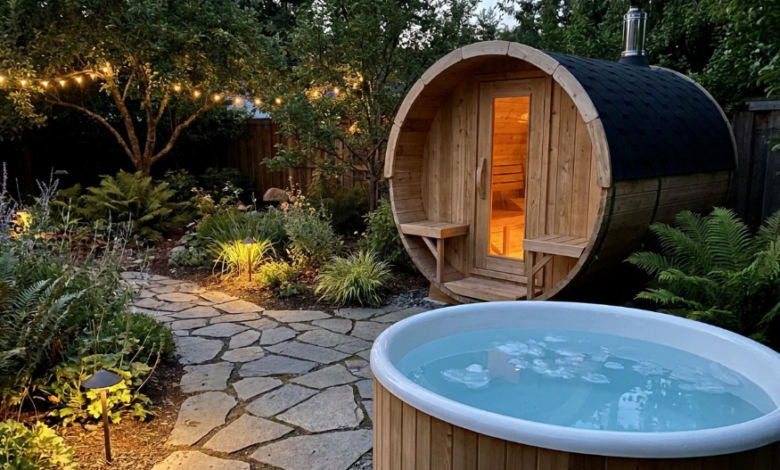
The five things that actually matter when buying a cold plunge are tank material, whether it includes a chiller or relies on ice alone, filtration quality, insulation for wherever it sits, and warranty length on the chiller unit specifically. A basic ice-only tub starts around $300 to $600, while a standalone chiller unit typically runs $3,500 to $6,500 once filtration and a cover are included.
1. Tank Material and Build Quality
Stainless steel tanks resist corrosion and hold up to years of daily temperature swings better than most alternatives, though they cost more and weigh more, which matters if the plunge needs to go up a flight of stairs or onto a deck. Rotomolded plastic tanks, similar in construction to a heavy-duty cooler, are lighter and cheaper but can develop small stress cracks over years of use, particularly in colder climates where the material contracts more. Inflatable tubs are the cheapest entry point and genuinely fine for testing whether cold plunging fits into a routine before committing to a permanent unit, but they are not built for years of daily use the way a rigid tank is. Wood-clad exteriors have also become common on mid-range units, mostly for looks, and the wood itself is typically a cladding layer over an inner liner rather than the structural material, so it does not change the durability question much either way.
2. Chiller vs Ice: How You’re Actually Cooling the Water
An ice-only setup avoids the cost of a chiller but requires buying, making, or hauling several bags of ice per session, plus regularly draining and refilling the tank, which adds up in both money and hassle for anyone using it more than occasionally. A built-in chiller maintains a set temperature automatically and typically runs 39 to 55 degrees Fahrenheit depending on the setting, with most first-time users starting warmer. The chiller is also the single most expensive component and the part most likely to need service, so it deserves more scrutiny than the tank itself when comparing models. Ask how many gallons the chiller can bring down to target temperature per hour, since an underpowered chiller paired with a large tank can leave the water lukewarm well into the next session if it never fully recovers between uses.
3. Filtration and Water Maintenance
Standing water that sits for days between uses needs real filtration, not just a strainer basket. Look for a unit with an integrated pump and filter cycle, ideally paired with an ozone or UV sanitation system rather than relying purely on chemical treatment, since heavy chlorine or bromine use in a small, frequently entered tank tends to irritate skin more than it would in a full-size pool. Ask specifically how often the filter cartridge needs replacing and what that costs, since a unit that looks affordable upfront can turn expensive if filter cartridges run $40 to $60 every month.
4. Insulation and Where It Will Actually Sit
An insulated tank shell keeps the chiller from working overtime, which matters both for the electric bill and for how long the compressor lasts. Outdoor placement in a climate with real winters needs a unit rated to keep running, or at minimum drain safely, below freezing, since a chiller not designed for that can fail or crack a line during a cold snap. Indoor placement solves the freeze problem but adds a humidity and drainage consideration most people do not think about until water is pooling on a basement floor. A floor drain nearby, or at minimum a waterproof mat and a plan for splashes, is worth setting up before the first fill rather than after.
5. Noise Level If You’re Buying a Chiller Unit
Chillers run a compressor much like a small refrigerator or window air conditioner, and most residential units land in the 45 to 60 decibel range. That is not loud in absolute terms, but it is a constant background hum, and placement near a bedroom window or a shared wall in a townhouse or condo is worth thinking through before installation rather than after a neighbor complains. Manufacturers publish decibel ratings, and it is worth comparing that number across models rather than assuming they are all roughly the same.
6. Warranty, and What a Realistic Budget Looks Like
Chiller components fail more often than tank shells, so a warranty that covers the chiller separately, ideally for at least one to two years, matters more than a long tank warranty on its own. Pricing across the market in 2026 spans widely: a basic ice-only inflatable tub starts around $300 to $600, a mid-range standalone chiller unit runs $3,500 to $6,500, and premium models with larger capacity or app-based temperature control go higher still. Comparing full specs side by side, rather than sorting by price alone, is easiest on a retailer’s own catalog page. sweatdecks.com lists chiller wattage, filtration type, and tank material together on each product listing, which makes that comparison faster than piecing specs together from separate manufacturer pages.
What the Research Actually Says About Cold Exposure
Interest in cold plunging often runs alongside interest in sauna use, and the research literature reflects that overlap. A review covering the effects of both heat and cold exposure on the body, with particular attention to Finnish sauna practices, found consistent physiological patterns across both types of thermal stress, though the strongest cardiovascular associations in that literature come from heat exposure specifically. A broader review of sauna bathing benefits summarized similar findings on regular thermal stress and cardiovascular markers. These are population-level associations built mainly on regular, repeated use over months or years, not evidence that a single cold plunge session produces a lasting effect, and cold-water recovery research specifically remains mixed on whether it helps or blunts training adaptations.
Frequently Asked Questions
Do I need a chiller or can I just use ice? Ice-only tubs work but require regular ice and water refills, which gets expensive and inconvenient. A chiller maintains temperature automatically and pays for itself in convenience for frequent users.
How cold should a cold plunge actually be? Most home units run 39 to 55 degrees Fahrenheit, with many starting warmer. Consistency of use matters more than hitting the lowest possible number.
How loud is a cold plunge chiller? Most run 45 to 60 decibels, comparable to a running refrigerator. Check the decibel rating if it will sit near a bedroom or shared wall.
What is a realistic total cost for a home cold plunge? A basic inflatable tub starts around $300 to $600. A standalone chiller unit typically runs $3,500 to $6,500.
References
- Effects of heat and cold on health, with special reference to Finnish sauna bathing, American Journal of Physiology, 2018
- Cardiovascular and Other Health Benefits of Sauna Bathing: A Review of the Evidence, Mayo Clinic Proceedings, 2018
- Clinical Effects of Regular Dry Sauna Bathing: A Systematic Review, Evidence-Based Complementary and Alternative Medicine, 2018
